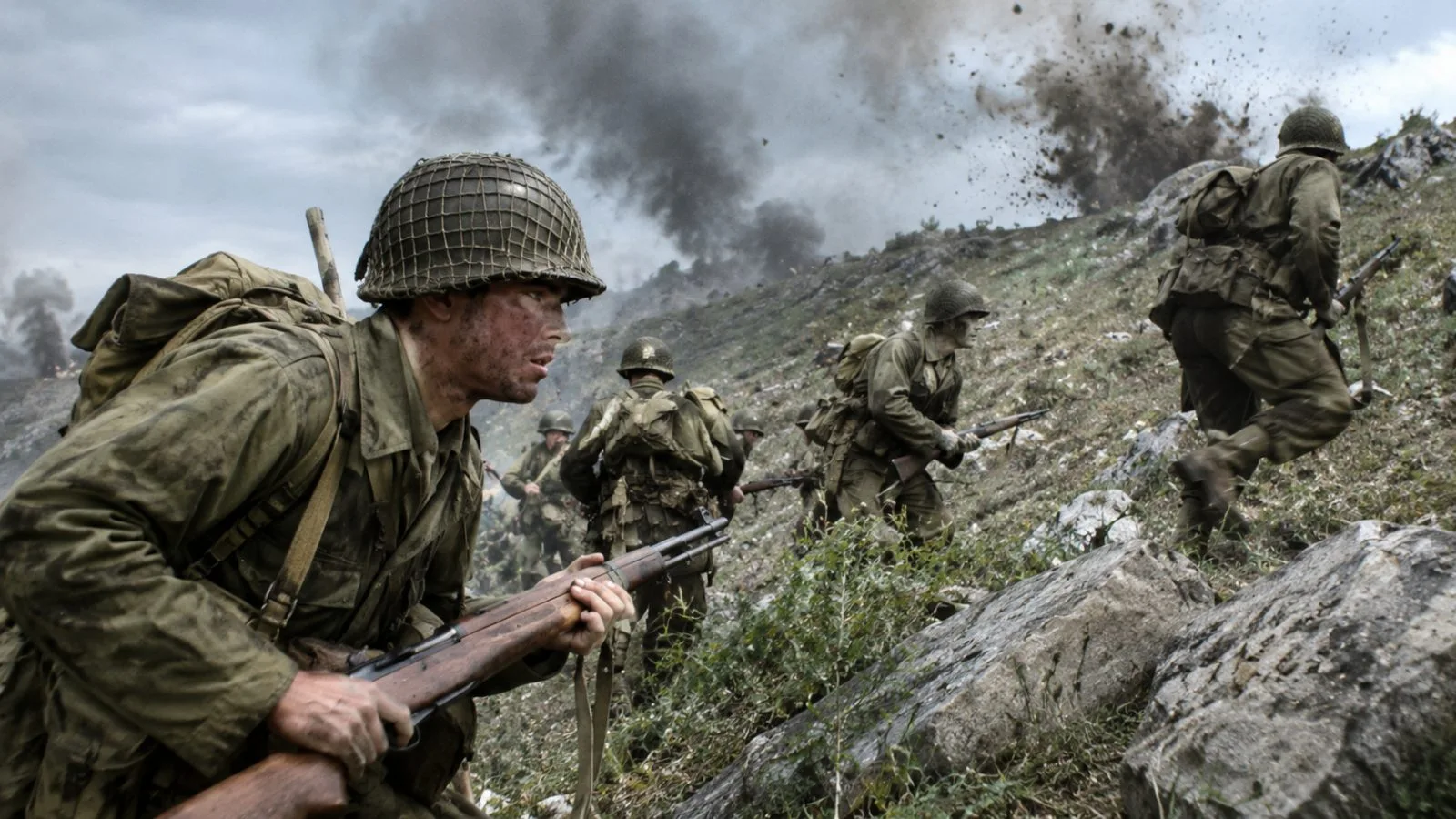
Battles and Campaigns
Follow the major campaigns across Europe and the Pacific, from the defense of Britain to the fighting on Iwo Jima.
Discover the battles, aircraft, soldiers, military innovations, and extraordinary stories that shaped World War II.
From 1939 to 1945, World War II transformed communities across Europe, Asia, Africa and the Pacific. Follow campaigns, examine the choices behind wartime technologies, and see how factories and families lived through the conflict.
Follow the major campaigns across Europe and the Pacific, from the defense of Britain to the fighting on Iwo Jima.
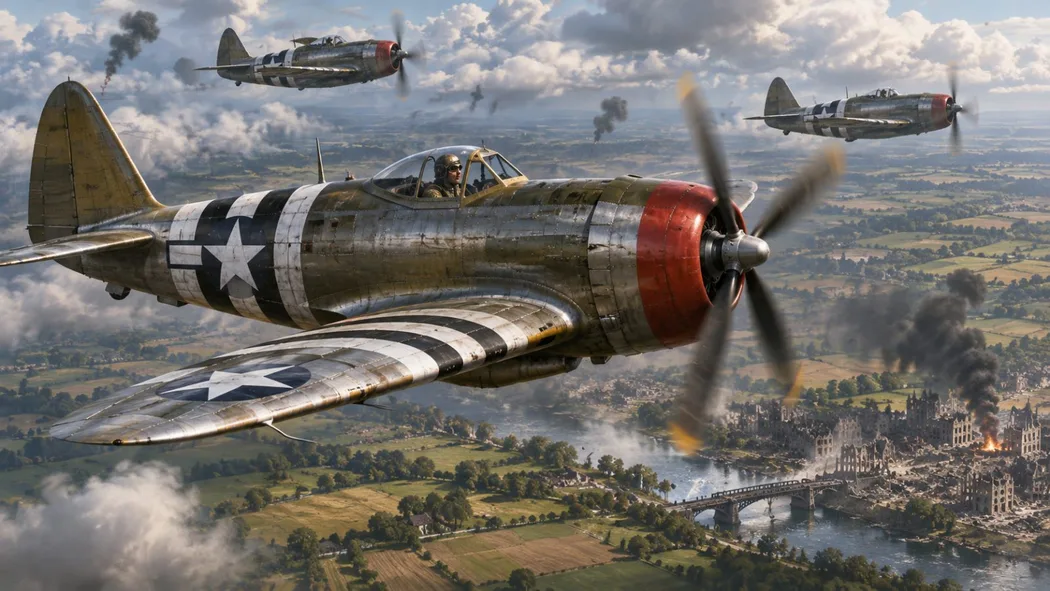
Explore the fighters and bombers of World War II through their design, crews, missions and factories.
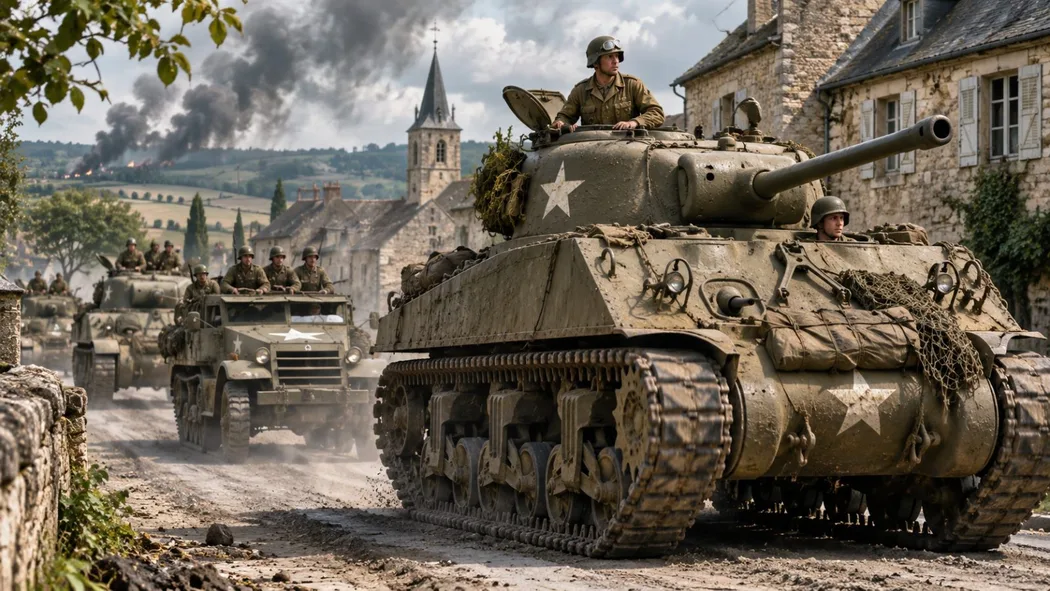
Study the tanks, scouts, carriers and utility vehicles that kept World War II armies moving.
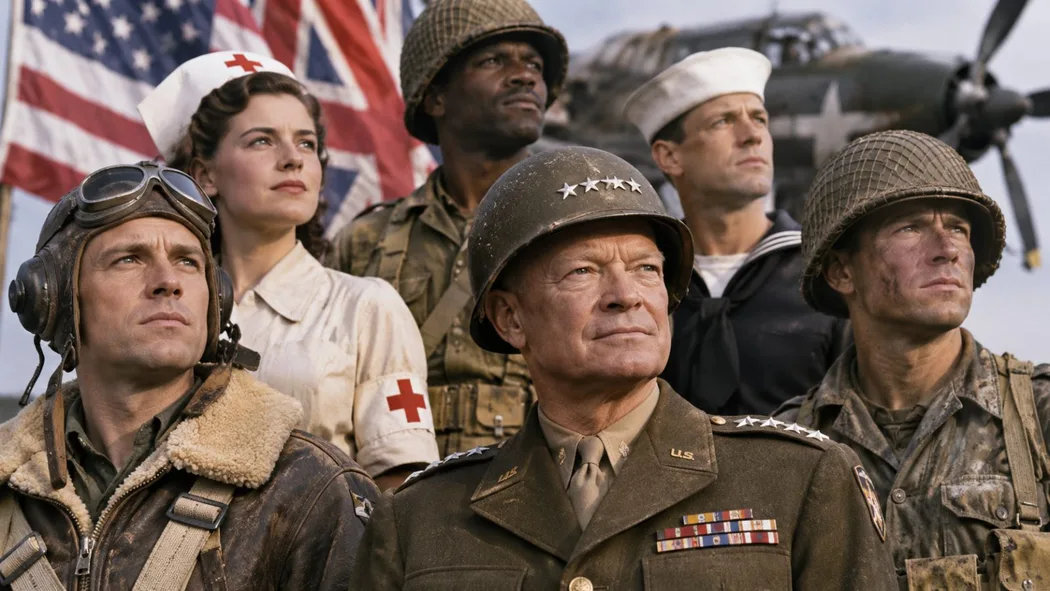
Learn how Allied leaders worked together and find records that document individual wartime experiences.
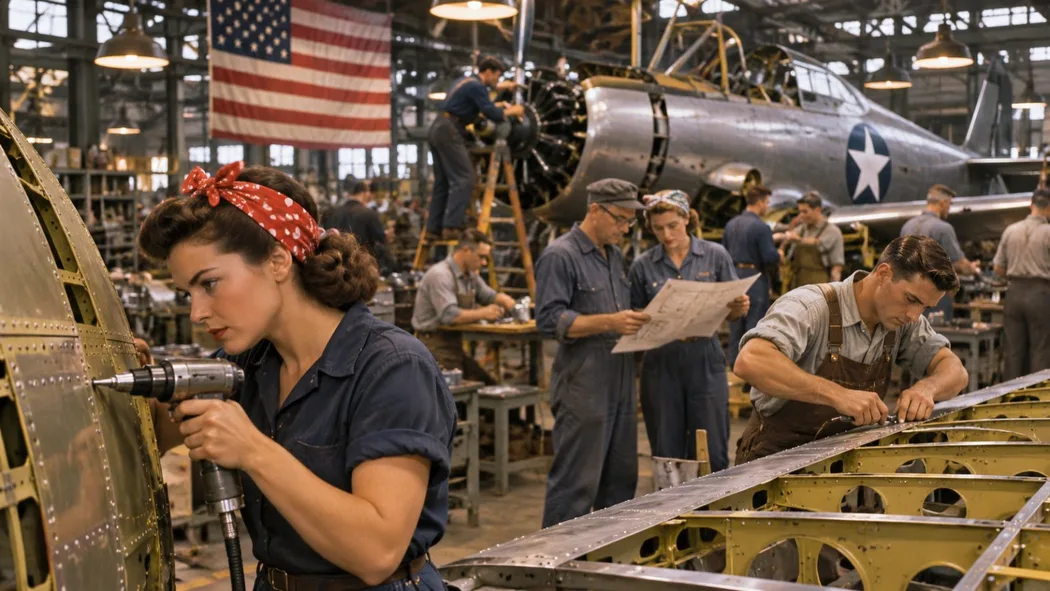
Trace how factory workers, shipyards and production networks supplied American and Allied forces.
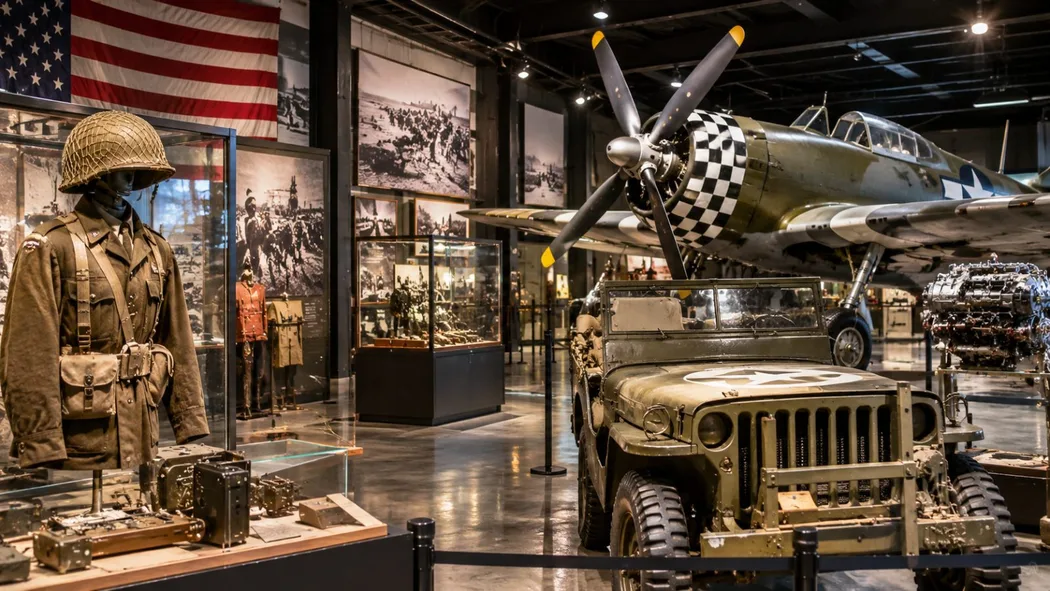
Explore how museums and archives care for aircraft, vehicles and personal records, and how visitors can support their work.
Follow the Thunderbolt from high-altitude escort to ground attack, and trace its connection to the workers who built fighters in Evansville, Indiana.
D-Day opened a front in occupied France on June 6, 1944. The landing was the first stage of a campaign that lasted through the summer, as Allied armies fought to expand their foothold and break out of Normandy.
The June 1942 Battle of Midway ended with the loss of four Japanese fleet carriers and the American carrier Yorktown. It marked a major shift in a Pacific war that still had years to run.
The battle for Stalingrad grew from Germany’s 1942 offensive in southern Soviet territory. It ended in early 1943 with the surrender of the encircled German Sixth Army and became a turning point on the Eastern Front.
Aircraft plants, shipyards and machine shops changed what they made and who worked there. Explore the people and production networks behind the equipment.
The Sherman served across several Allied armies and theaters. Its wartime record is best understood through production, transport, repair and cooperation with infantry as well as through armor thickness and armament.
A name, date and service branch can open a path into the wartime experiences of an individual. Personnel files, unit records and home-front documents often tell different parts of the same story.
Wartime demand opened factory jobs to many women in the United States. Their work helped sustain aircraft, ship and equipment production, though opportunities and postwar outcomes varied widely.
A restored vehicle, a shop-floor photograph and a recorded interview preserve different kinds of evidence. Learn how to read exhibits critically and care for records in your own family.