D-Day and the Normandy Campaign
D-Day opened a front in occupied France on June 6, 1944. The landing was the first stage of a campaign that lasted through the summer, as Allied armies fought to expand their foothold and break out of Normandy.
Follow the major campaigns across Europe and the Pacific, from the defense of Britain to the fighting on Iwo Jima.
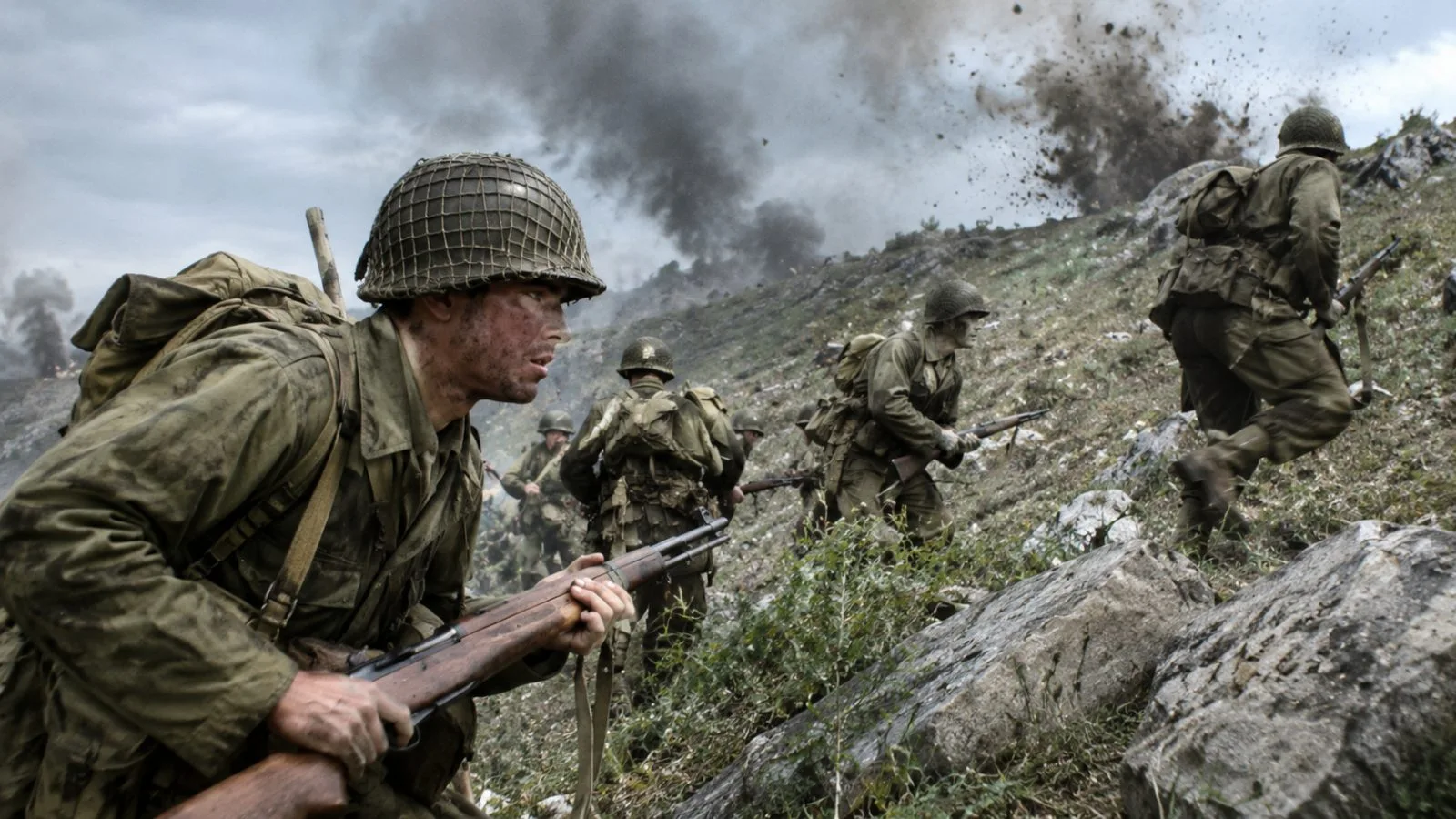
D-Day opened a front in occupied France on June 6, 1944. The landing was the first stage of a campaign that lasted through the summer, as Allied armies fought to expand their foothold and break out of Normandy.
In December 1944 Germany attacked through the Ardennes, creating a salient in the Allied line. The offensive put newly arrived units, veterans, supply drivers and civilians under intense pressure during one of the coldest stretches of the campaign.
The June 1942 Battle of Midway ended with the loss of four Japanese fleet carriers and the American carrier Yorktown. It marked a major shift in a Pacific war that still had years to run.
The battle for Stalingrad grew from Germany’s 1942 offensive in southern Soviet territory. It ended in early 1943 with the surrender of the encircled German Sixth Army and became a turning point on the Eastern Front.
U.S. Marines landed on Iwo Jima in February 1945. Its airfields and location between the Mariana Islands and Japan made the island important to American air operations.
During the summer and autumn of 1940, the Royal Air Force defended Britain against German air attacks. The outcome depended on how aircraft, observers, controllers and crews worked together.